New: Boost's Raiser's Edge NXT Integration now supports Galas, Auctions, and Reunions
Learn More


How Trinity Episcopal School used text to convert more than 60% of clicks into gifts, without adding staff or sending a single extra email.
Trinity Episcopal School, a tight knit PreK-8 school in Austin, Texas wanted to know if text could work for their community. Like a lot of schools, they'd watched traditional appeals get harder to cut through, and they set out to test whether a text appeal could actually convert. Amanda Lipstein, Director of Development, leads the strategy behind their annual fund, from setting the campaign theme to building the months-long runway that sets up their one-week push. Audrey Ross, Stewardship & Donor Relations Manager, keeps the engine running day to day, tracking participation, managing their class champion model, and staying close to the donor experience. Together they turned two text messages into a $150K week, and they recently walked us through how they did it. We've taken the most insightful moments and included them here for you.
Before we get into the numbers, meet Audrey and Amanda from Trinity Episcopal School. Here's a little about their school in their own words.
Donors have more options and more solicitations coming at them than ever. Hudson Flynn, Boost's Sr. Product Marketing Manager talks about why schools have to work harder to cut through the noise.
The case for text isn't a hunch. It's in the numbers. The gap between text and email isn't small, it's the difference between getting read and getting buried.
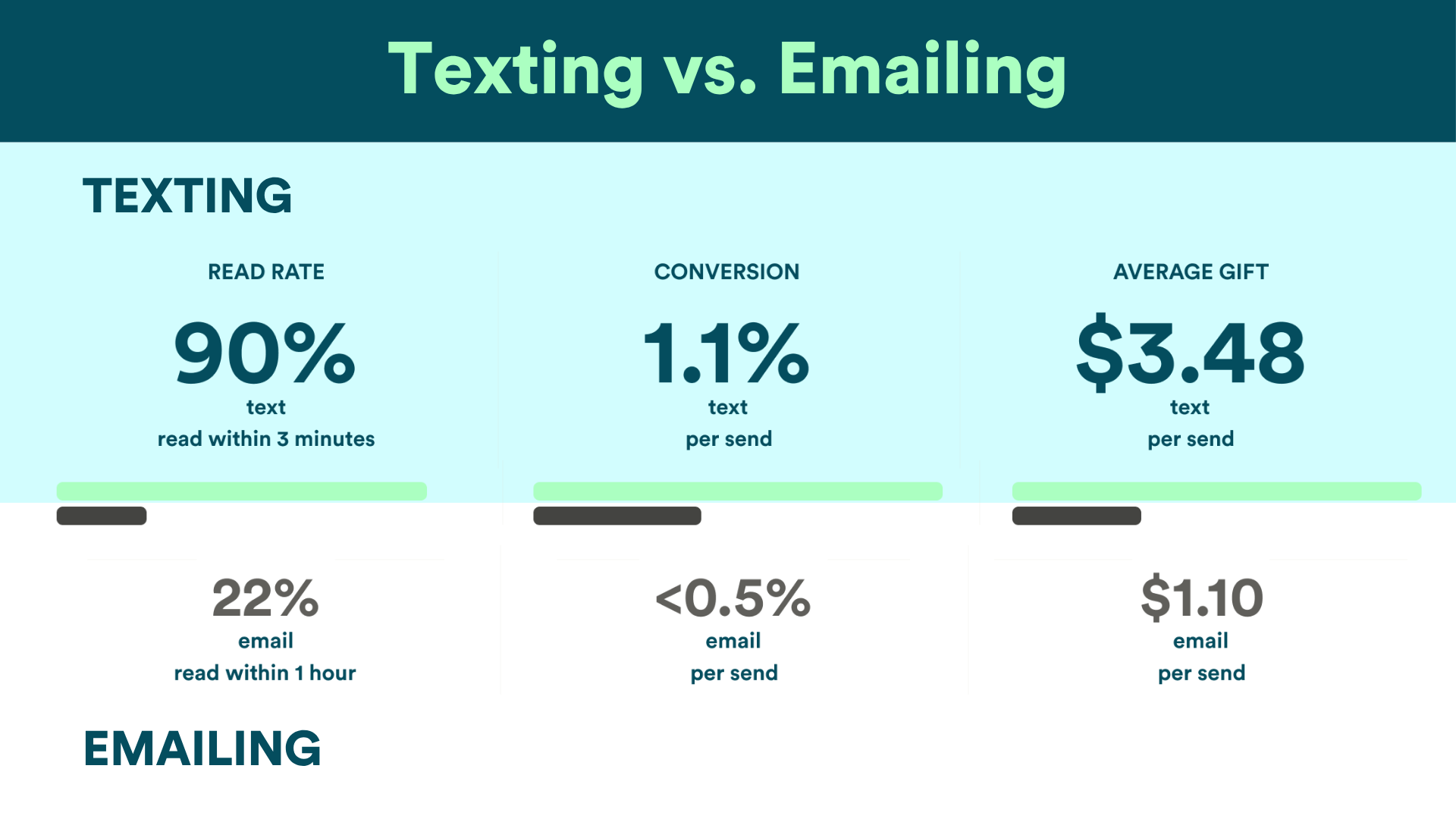
Texts are read 90% of the time within three minutes. Emails sit at 22% within an hour. Texts convert at 1.1% per send against less than 0.5% for email, and the average gift per send is $3.48 by text versus $1.10 by email. Same ask, same audience, more than three times the return.
The instinct is to match the channel to the generation: email for older donors, social for younger ones. But when you rank how each segment actually prefers to be reached, text lands at or near the top across the board.
.png)
Text is the most-checked channel for Gen Z and Millennials, and it still beats mail and social for Gen X and Baby Boomers. That top row tends to matter most, since K-12 parents largely fall into those two groups, and schools that end earlier, like K-8s, tend to skew younger still. You don't have to guess which channel a given family prefers. Text reaches all of them.
A great text only works because of everything that comes before it. This is Trinity's prep timeline, the months of work that happen before a single text goes out. Amanda walks through how they built toward their Annual Fund week-long push.
By the time that first text lands, families have already seen the mailers, the yard signs, the faculty video, and a string of personal appeals. The text isn't the campaign. It's the final push at the end of a months-long build.
Trinity recruits one parent champion per class to rally their community from the inside. Amanda and Audrey explain how they pick them, train them, and keep them from stepping on each other's asks.
Champions are chosen for prior giving and community connectedness, trained in both Zoom and in-person sessions, and given personalized class rosters. Leadership prospects are flagged "do not contact" so champions never double-ask a donor who's getting a more personal touch elsewhere.
Boost pages convert about 45% of page visitors into donors. That's more than double the 20% standard Raiser's Edge form. But Trinity's page hit above 60%, and a big part of why is where their participation leaderboard lives. As Hudson puts it in the clip below, the page felt less like a transaction and more like a conversation with a donor.
Trinity sent two texts to bookend their annual fund week, one to kick it off, one to close it out. The results speak for themselves. Audrey walks through exactly what they sent and what came back.
The Monday text brought in 47 clicks, 28 donors, and $78,018, including a single gift of $26,316. Sixty percent of the people who clicked made a gift.
The Friday text, sent only to families who hadn't yet given, brought in 50 clicks, 32 donors, and $72,000. Sixty-four percent of clickers gave.
Two texts. Roughly $150,000. A click-to-gift conversion rate north of 60% (the percentage of people who give after clicking your outreach). Suppressing past donors is what made that second text convert so well. It only reached the people who still needed the nudge. Many schools have to do this manually, or can't get it done at all, and their conversion drops while stewardship suffers, nothing sours a donor faster than an ask for a gift they already made.
Text isn't just for small gifts. Hudson breaks down how Trinity's two texts drove their major gifts, with four- and five-figure donations making up more than 60% of what came in.
Both of the largest gifts came through Apple Pay, right from the phone. And the gifts came in fast: more than 50% of the dollars from both texts landed within the first 90 minutes of each send.
No. Trinity layered two texts on top of the channels they were already running, mailers, emails, and class champion outreach. The text landed at the end as the final push, not a replacement for everything else.
Trinity treats a family sharing their contact information as implied consent, with a clear option to opt out of every message. The biggest legal requirement is making sure recipients can unsubscribe, which is built into Boost texts. Some schools also send a quick heads-up email ahead of time letting families know to expect texts.
Trinity saw zero unsubscribes. They kept it to two texts total, suppressed anyone who had already given, and sent from a separate number so the appeal never got mistaken for an emergency alert. The discipline is what keeps it from feeling like harassment.
These clips are the highlights, but the full session goes deeper: the exact text copy Trinity sent, how they handle consent and leadership buy-in, and a live Q&A with Audrey and Amanda.
Trinity's page turned clicks into gifts because it felt personal, with a live participation leaderboards and comment walls that let families see their community giving in real time.
Preview your giving page on Boost.